
What do you do when a logistics operation is disrupted and you do not have all the information to make the perfect decision?
Those are the moments when it becomes visible how complex decision-making can be. Different parties have their own interests. Information is incomplete. Time plays a role. And a choice that makes sense for one party can create new problems for another.
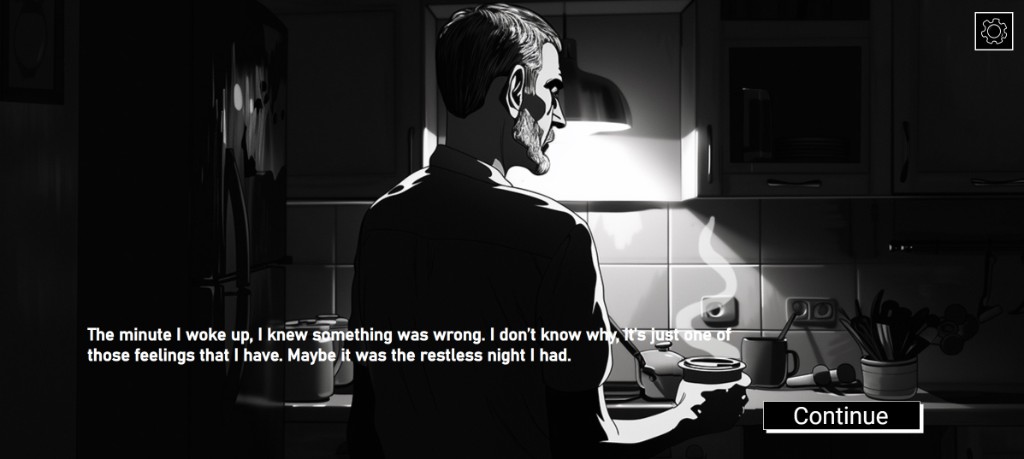
For TU Delft we developed The Disruption Game: an interactive Dilemma Story that takes participants into a logistics disruption. Not to find one right answer, but to experience how decisions ripple through a complex system.
The situation
A disruption changes the playing field
Logistics processes consist of many parties, dependencies and agreements. As long as everything goes according to plan, procedures and systems offer a hold.
But a disruption changes the playing field.
At that moment people have to respond to a situation that is not fully predictable. They have to assess information, weigh interests, communicate with other parties and make decisions while the consequences are not yet fully visible.
That makes a disruption interesting as a learning environment. The challenge is not only knowing what the rules are, but above all deciding what you do when reality starts to depart from those rules.
The challenge
How do you practise a situation without a simple answer?
You can explain how logistics processes work. You can describe procedures and study models. But that does not automatically let someone feel the tension of a real disruption.
Because in practice a dilemma appears.
Do you wait for more information or act immediately? Do you choose the interest of your own operation or take the wider logistics system into account? When do you share information? And what happens when other parties are making their own choices in the meantime?
That is exactly where the learning challenge lay.
The experience should not tell participants what to think, but place them in a situation in which they had to weigh, choose and respond to the consequences themselves.
The design question
Can we make decision-making playable?
The central design question therefore became:
How do we create a realistic logistics scenario in which participants make choices under pressure, weigh different interests and experience how their decisions ripple through the system?
That shifted the focus from transferring knowledge to decision-making.
Not explaining first and testing afterwards.
But first creating a situation in which knowledge, insight and judgement become necessary in order to move forward.
The route
From logistics process to interactive story
We translated the logistics reality into a Dilemma Story: a narrative scenario in which a disruption develops step by step.
The participant receives information about what is happening and has to make a decision at several moments. Every choice determines how the story continues and affects different interests within the situation.
That means it is not a classic question with a right or wrong answer.
A choice can, for example, be favourable for speed, but turn out less favourable for collaboration. A cautious decision can limit risk, while at the same time costing valuable time.
That tension is the heart of the experience.
By making choices and consequences visible, there is room to explore different strategies without mistakes having direct consequences for a real logistics operation.
The experience
Choose, experience the consequences and weigh again
During the story the participant is confronted again and again with the question: what would you do now?
Not all information is available in advance. New events change the situation and earlier choices carry through into the rest of the scenario.
The participant therefore has to keep setting their own course.
That makes the experience different from a traditional knowledge test. The participant does not reproduce an answer, but practises the process behind a decision: interpreting information, recognising interests, weighing them and finally acting.
The story provides context and tension. The dilemmas create active involvement.
That creates a safe setting in which participants can explore different choices and experience what those choices mean.
The result
A complex situation becomes explorable
The Disruption Game makes an abstract and complex logistics question concrete by placing participants in the middle of it.
Instead of only talking about decision-making during disruptions, participants can practise with it. They experience that decisions are connected, that different interests can be at play at the same time and that a choice rarely stands on its own.
The interactive form does not make that complexity simpler than it really is.
It makes it explorable.
And that is exactly why it creates material for reflection and conversation: why did you make this choice? Which interest was decisive for you? Which information were you missing? And would someone in another role reach the same decision?
The insight
A dilemma does not need a right answer to be instructive
This project shows why Dilemma Storytelling fits subjects in which professional action is about weighing options.
Not every practical situation can be reduced to right or wrong. Sometimes the most important knowledge sits in understanding the tension between different possibilities.
A story gives that tension context. Game principles make it possible to experiment with it.
Participants may search, choose and try, without getting lost. They experience consequences in a safe setting and can then reflect on their own route.
That is the power of Play for us: not telling someone which trade-off to make, but designing an environment in which people can practise making that trade-off.
From a complex choice to a learnable experience
Does your organisation have situations in which people know a great deal, but still have to make difficult trade-offs in practice?
A Dilemma Story can help to make those moments visible and practicable.
We map the situation, roles, interests and decision moments and translate them into an interactive learning route in which participants discover for themselves what their choices set in motion.
Discover what Dilemma Storytelling can mean for your learning challenge.
Project details
- Client
- TU Delft
- Sector
- Education and logistics
- Type of solution
- Dilemma Storytelling
- Theme
- Decision-making during logistics disruptions
- Format
- Interactive scenario with choices and consequences
- Role of Preludens
- Concept, game design, storytelling and development